
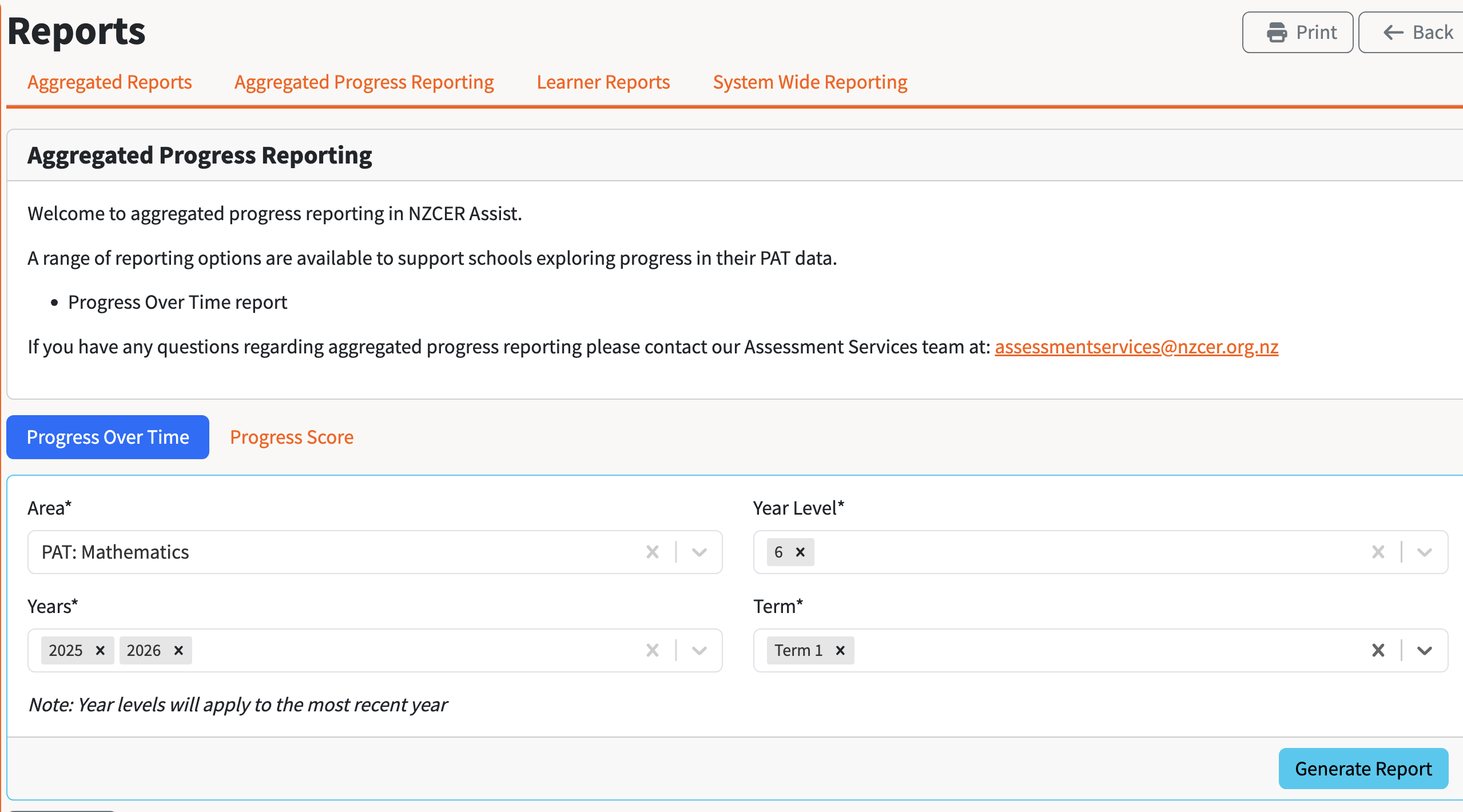
This report allows leaders and middle leaders to drill down into the year levels to track, monitor or discover the progress of cohorts to determine who the teaching and learning is working for and who it is not and then lead an inquiry discussion as to why. The Report can create up to three groups side by side within a Year level.
Click on Reports (left-hand menu)
Then Aggregated Progress Reporting
Choose the subject and use the filters to refine your search. It can be:
- two time points in one year or across years
- multi-year groups
- multi terms
Generate Reports
The box plots are generated as is a new set of filters. Leaders can now begin choosing groups of interest.
- Clean the data by removing students who only sat one test for monitoring progress
- Use the filters to create your first group - you can choose multiple filters e.g. Māori girls. Click Create Group
- Review the progress of that group - this may help your choice for the next group of interest - what do you need to know?
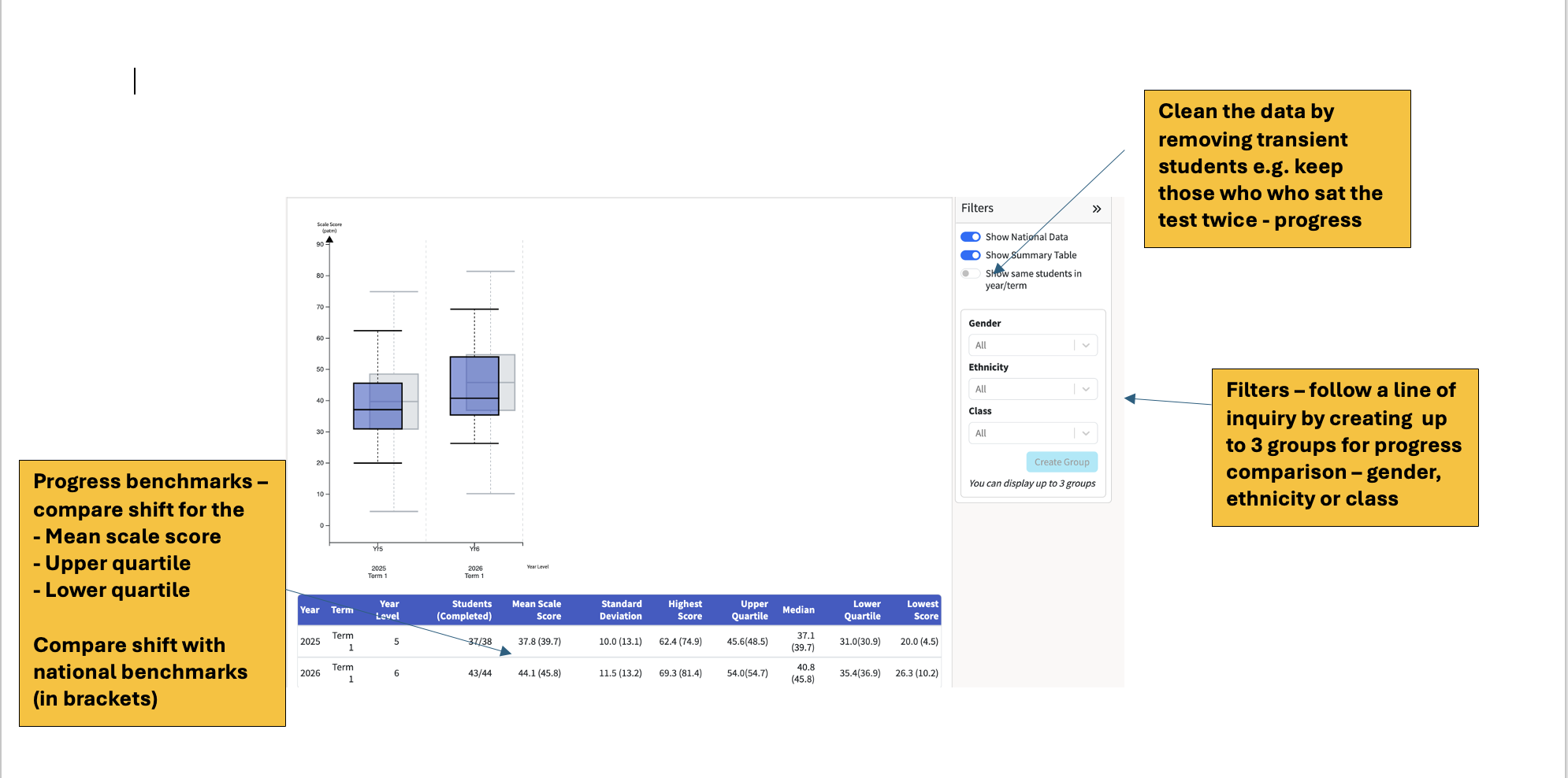
Once you have created the three groups of interest, use the Table below to calculate shift across each group:
- the mean scale score
- the Upper Quartile
- the Lower Quartile
The question to answer is whether there is equity in shift both within one group and then between the groups.
Using the Aggregated progress report
Leaders will find many reasons to use this report:
- Examine the impact of a particular strategy, intervention/programme. This may not be a maths-related initiative as you may want to use academic shift as a signpost of increased engagement due to a focus on ākonga- kaiako relationships.
- Middle leaders/Team Leaders reviewing progress for the different classes in their Teams to highlight strengths and needs in teacher capability for targetted PLD/mentor teachers/effective teaching strategies.
- Using the ethnic and gender filters can often highlight an unforseen issue.
- Using the Upper and Lower quartile shift is helpful to understand if the teaching and learning is working more effectively for students with strength in the subject or students who are operating at a lower achievement level.